Websites
Landing Page or Full Website: What Does Your Business Actually Need?
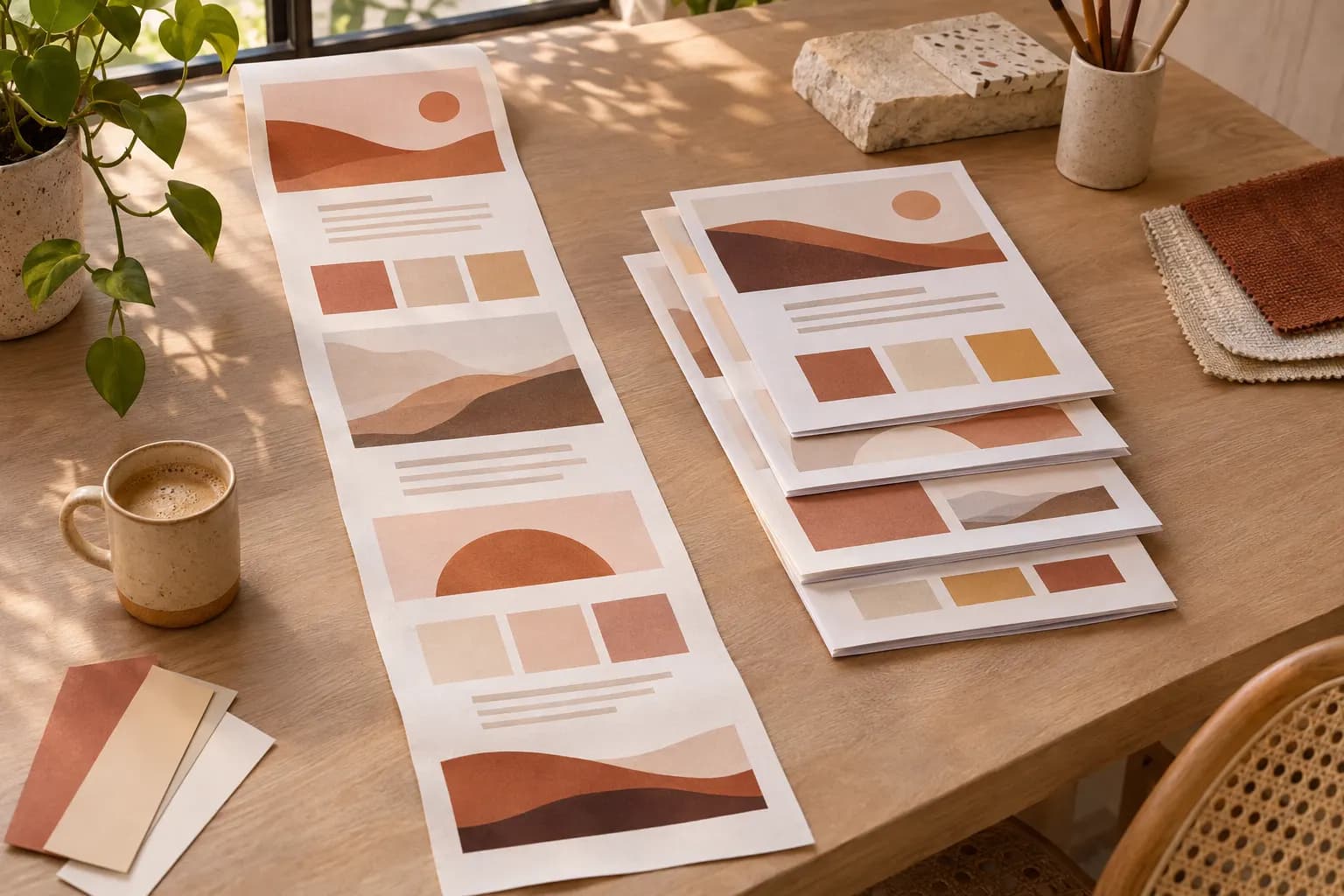
A landing page is a single page with a single goal, such as leaving details or sending a WhatsApp message, and it works best for paid campaigns and launches. A website is several pages that present the whole business, and it fits when you want to show up on Google, build trust and present more than one service. Most small businesses end up needing both, but on a limited budget, what you build first depends on where your customers will come from: paid ads or Google search.
What is the difference between a landing page and a website?
The key difference is not the number of pages but the goal. A landing page is built so the visitor takes one action, and anything that distracts from that action is removed: no menu, no outbound links, one message and one button. A website is built so the visitor gets to know the business, understands what it offers, finds what interests them and decides to get in touch in their own time.
| Landing page | Website | |
|---|---|---|
| Goal | One action: leave details, WhatsApp, sign up or buy | Present the business, build trust and bring enquiries from many sources |
| Structure | One long page, no menu | Several pages: home, services, about, contact and more |
| Main traffic source | Paid campaigns, email, social links | Google search, referrals, business cards, social |
| Organic SEO | Limited, one page and little content | Better, a page per service and growing content |
| Typical build time | One to three weeks | Three to six weeks |
| Typical market price (estimate) | About ₪1,500 to ₪6,000 | About ₪3,000 to ₪20,000 |
| Measurement | Simple: how many visited and how many got in touch | More complex, several paths through the site |
The prices are a general estimate for the Israeli market and vary a lot between providers. For a full breakdown of what drives the price, see how much a business website costs in Israel.
When is a landing page the right choice?
A landing page fits when you know exactly what you want the visitor to do and you have a way to send traffic to it. Common situations:
- You are running a paid campaign on Google, Facebook, Instagram or TikTok. A focused landing page usually converts better than a website's home page, because the visitor gets exactly what the ad promised.
- You are launching a product, service or event and want to test demand quickly before investing in a full site.
- You have one core service, such as a personal trainer, private tutor or air-conditioning technician, and the customer only needs to know what you do, roughly what it costs and how to reach you.
- You want to test messages. It is easy to run two versions of a page and see which brings more enquiries.
- Your budget is limited and you need leads now, not in six months.
If you are planning a campaign, decide where to advertise first. Our guide on Google Ads vs. Facebook and Instagram ads helps you choose the channel, and the landing page is built to match it.
When do you need a full website?
A website fits when your customers search for you or your service on Google, when you offer several different services, and when the decision to buy from you takes time and requires trust. Common situations:
- You want to show up on Google over time. Organic SEO needs a separate page for each service and growing content. A single landing page can hardly do that.
- You have several services or audiences. A clinic offering several treatments, a firm covering several practice areas, or a business serving both consumers and companies.
- Customers check you out before they call. In fields like law, accounting, health, renovation or education, people want to see who you are, how you work and what others say.
- You want to build a brand, not just generate leads for the current campaign.
We explain how a website starts appearing on Google, and why it takes time, in SEO for small businesses.
What should you build first on a limited budget?
The right question is not which is better, but where your first customers will come from. Here is a simple decision framework:
- If you plan to run paid ads in the coming months, start with a focused landing page. It goes live quickly, costs less and starts bringing enquiries in the first days of the campaign.
- If most customers come from referrals and Google search, start with a small website of three to five pages, and set up a Google Business Profile at the same time. For local businesses, the profile alone brings in a fair number of enquiries.
- If you are just starting out and still testing the market, a single landing page with a WhatsApp button is a cheap way to learn what works before investing more.
- If you already have a website, you do not always need a new one. Sometimes it is enough to add campaign landing pages on the same domain.
What does a good landing page need?
A good landing page looks simple, but every element is there on purpose. These are the parts that appear on almost every page that converts:
- A headline that answers the customer's problem, in the same words as the ad.
- A short explanation of what they get, who it is for and who it is not for.
- A reason to believe: real testimonials, work samples, certifications or relevant experience.
- One clear call to action, repeated a few times down the page. In Israel, a WhatsApp button often works better than a long form.
- Answers to the questions that stop people from reaching out, such as an approximate price, service area and response times.
- Fast loading on mobile, because most campaign visitors arrive on their phones.
- Accessibility, as with any Israeli business website.
And what happens after someone clicks? If enquiries arrive when you are not available, consider a WhatsApp bot for your business that replies instantly, books appointments and passes hot leads to you.
What does a business website need?
A small business website does not have to be big. For most businesses a few well-built pages are enough: a home page that explains within seconds what you do and for whom, a page for each core service, an about page showing the people behind the business, a contact page with WhatsApp, phone and service area, and an accessibility statement. If you are unsure which platform to build it on, read WordPress vs. Shopify vs. Next.js.
Common mistakes when choosing between them
- Sending a campaign to the home page. The visitor arrives from an ad about a specific service and lands on a general page. You end up paying for clicks that never become enquiries.
- Expecting a landing page to rank on Google by itself. It is built for paid traffic, not organic search.
- Building a big site before you have anything to say. Twenty empty pages help no one. A small, good site that grows with the business is better.
- Not measuring. Without tracking enquiries, you cannot tell whether the page or the site is working.
- Copying a competitor's landing page. What works for them is built around their audience, price and message. A good page starts from the questions your own customers actually ask.
How do you know whether the page or site is working?
Without measurement, every decision is a guess. Before launch, make sure every enquiry is tracked: WhatsApp clicks, phone calls, submitted forms. On a landing page the key number is the conversion rate, how many visitors got in touch. If it is low, check the match between the ad and the headline first, then mobile speed and how clear the button is. On a website, look at which pages enquiries come from, which Google searches bring visitors, and how many enquiries each source brings over several months.
How Pnina handles landing pages and websites
Our Launch package starts at ₪4,900 before VAT and lets you choose between a site of up to five pages or a landing page, along with a logo and brand-colour refresh, Google Business Profile setup, an accessibility statement and a WhatsApp button. A landing page usually goes live within one to three weeks, a website within three to six.
If you also want us to run the campaigns that send traffic to the page, the Growth package from ₪3,900 a month includes Google or Meta campaign management, social media management and monthly SEO. Ad spend is paid directly to the platforms and is not included. More on our website design and paid advertising services.
Questions and answers
What is the difference between a landing page and a website?
A landing page is a single page with one goal, such as leaving details or messaging on WhatsApp, with no menu and no distractions. A website has several pages presenting the business, its services and the people behind it. Landing pages suit paid campaigns, while websites suit Google search and building trust over time.
How much does a landing page cost in Israel?
In the Israeli market a landing page usually costs roughly ₪1,500 to ₪6,000 before VAT, depending on design, copywriting and integrations such as forms, WhatsApp and analytics. Prices vary between providers. Make sure the page includes mobile optimisation, accessibility and enquiry tracking, and that it is built on your own domain.
Can a landing page rank on Google?
It can appear, but usually not in a way that brings much traffic. Organic ranking needs several pages with in-depth content, a page per service and updates over time. A landing page is better suited to paid traffic. If you want to show up in search, a small website alongside a Google Business Profile is the better route.
Can I start with a landing page and turn it into a website later?
Yes, and it is a good way to start on a limited budget. If the page is built on your business domain and on a platform that can grow, it can become the home page or one of the service pages when you add more. Nothing goes to waste, and the messages that worked in your campaign carry over to the site.
How many pages does a small business website need?
Most small businesses need three to seven pages: a home page, a page for each core service, about, contact and an accessibility statement. A small site with good content beats a big site full of empty pages. You can add pages and guides later as the business grows and has more to say.
For a Facebook campaign, is a landing page or direct WhatsApp better?
It depends on the service. For a simple service the customer already understands, sending people straight to WhatsApp can work very well. For a service that needs explanation, trust or price comparison, a landing page that explains and persuades and then leads to WhatsApp usually converts better. The best way to know is to test both and measure.
Related services

Websites
Brochure sites, landing pages and content sites: right-to-left design, speed, accessibility and a WhatsApp button, all owned by you.
Paid Ads
Paid ads on Google, Meta and TikTok for small businesses: strategy, creative, conversion tracking and optimization, with ad accounts in your name.
Related guides
How Much Does a Business Website Cost in Israel? A Practical Price Guide
Realistic price ranges for brochure sites, landing pages and online stores in Israel, the running costs nobody mentions up front, and how to read a quote properly.
Google Ads or Facebook Ads? Where a Small Business Should Spend First
Google catches people already searching for you; Meta creates demand from people who weren't. Here is how to pick a starting point and measure it.

SEO for Small Businesses in Israel: A Practical Step-by-Step Guide
Ten practical steps to get a small business showing up on Google, without a big-company budget or unrealistic promises.