SEO and AI search
SEO for Small Businesses in Israel: A Practical Step-by-Step Guide

SEO for a small business starts with three things: a complete Google Business Profile, a fast site with a clear page for every service, and content that answers exactly what your customers type into Google. For most small businesses, momentum arrives after 3 to 6 months of consistent work, not from a single trick. This guide gives you the right order, what you can do yourself, and where a professional is worth paying for.
What is SEO, and how is it different from paid ads?
SEO (search engine optimisation) is everything you do so your business appears in Google's regular results, the ones not labelled "Sponsored". You don't pay Google per click, but you do invest time or money in content, your website and your reputation. Paid ads work the other way round: you pay for impressions or clicks, and the traffic stops the day the budget runs out. Most small businesses do best with a mix of both, and our guide to Google Ads versus Meta ads explains when each channel makes sense.
| Organic SEO | Paid ads | |
|---|---|---|
| When results show up | Usually after 3-6 months | Sometimes within the first few days |
| Cost per click | None, you pay for the work | You pay the platform per click or impression |
| When you stop | Rankings fade gradually | Traffic stops almost immediately |
| User trust | High, feels like Google's recommendation | Some users skip ads entirely |
| Best for | Businesses planning long term | Promotions, launches, testing demand |
Small-business SEO is not the same game as ranking a big content site or a national store. You don't need to beat Wikipedia for "lawyer". You need to show up when someone in your city searches "family lawyer in Petah Tikva" or "kids' hairdresser in Ramat Gan". Those searches are smaller, but the person typing them is ready to pick up the phone.
How do I start SEO for a small business? 10 steps in order
Order matters. Plenty of owners start by writing blog posts while their site is slow and they don't even have a Google Maps listing. Here's a better sequence:
- Google Business Profile. For any business serving a specific area, this is the single highest-impact step. Choose an accurate category, add hours, real photos and services. Our guide to setting up a Google Business Profile walks through it step by step.
- Simple keyword research. Write down 20 to 30 phrases customers actually type: service plus city, price questions, "near me", comparisons. Google's autocomplete and the "People also ask" box are free and surprisingly useful.
- A sound technical base. A site that loads fast on mobile, runs on https, has no broken pages and is connected to Google Search Console.
- One page per service. A single page trying to rank for everything ranks for nothing. Give each service its own page with a clear heading, an explanation, an indicative price or range, FAQs and a contact button.
- Area pages, only if they're real. If you genuinely work in several cities, a page per area with unique information (travel times, local projects) can help. Dozens of identical pages with only the city name swapped can hurt.
- Content that answers questions. Guides like "how much does it cost", "what's the difference between" and "how to choose" bring in people who are still deciding, and show Google you know your field.
- Reviews. Ask every happy customer for a Google review, and reply to every review, including the negative ones, politely and to the point.
- Mentions and links from other sites. Industry directories, professional associations, suppliers and partners, the local paper. Relevance and quality beat volume.
- Measurement. Once a month, check Search Console: which phrases you appear for, how many clicks came in, and which pages are growing.
- Consistency. SEO is a marathon. One good article a month for a year beats ten articles in one week followed by silence.
How do I choose keywords for a local business?
The classic mistake is chasing the broadest, most competitive term. A small business gains far more from longer, specific phrases. Think in three types of search: service searches ("air conditioner installation in Holon"), question searches ("how much does AC installation cost") and comparison searches ("inverter or regular AC"). Service searches belong on a service page, question searches, especially about price, belong in a guide, and comparison searches suit an article that helps people decide.
Pay attention to language too. Israeli customers mostly search in Hebrew, sometimes with spelling mistakes, and often mix in English terms. If you also serve English, Russian or Arabic speakers, pages in those languages can open a channel your competitors ignore. An English page is often the best way to reach expats and new immigrants who search in English even while living here.
What does my website need for Google to like it?
Google tries to show the result that serves the searcher best. In practice that means a site that is fast, easy to use on a phone, clear and secure. If your site was built years ago, is slow, or lives on a single page, a big part of the job may be fixing the foundations first. We cover the options and typical prices in our guide on how much a business website costs.
- A clear heading and subheading on every page, with the main phrase in natural language.
- A meta description that explains in a line and a half what's on the page and why it's worth the click.
- Mobile load speed: compressed images, no unnecessary plugins, decent hosting.
- Accessibility to the Israeli standard. Beyond the legal duty, an accessible site is usually easier for search engines to understand too. See our guide to website accessibility law in Israel.
- Structured data (Schema) that tells search engines your business name, address, hours and services.
- Consistent contact details: the same name, address and phone number on your site, on Google and in every directory.
How long does SEO take to show results?
There's no single answer, and anyone promising you first place by a certain date isn't telling the truth. Google doesn't sell positions and nobody controls the algorithm. What we can describe is a typical path for a local business in a moderately competitive field:
| Period | What gets done | What you usually see |
|---|---|---|
| Month 1 | Audit, technical fixes, Google Business Profile, keyword research | Little change yet, sometimes a jump on Google Maps |
| Months 2-3 | Stronger service pages, first content, reviews, mentions | Appearing for longer, specific phrases |
| Months 4-6 | Regular content, improving pages based on data | Traffic and enquiries starting to build momentum |
| After six months | Maintenance, expanding to more competitive phrases | A steadier lead channel, depending on field and competition |
If you need customers this month, don't wait for SEO: run a small paid campaign alongside it. The campaign brings enquiries now, while SEO builds a channel that doesn't depend on an ad budget.
What about ChatGPT and Gemini? Is SEO still relevant?
More and more people ask ChatGPT, Gemini or Perplexity "who's a good plumber in Haifa", and Google itself shows AI summaries above the results. The good news is that most of what helps SEO helps there too. Clear content, consistent details, reviews and mentions on other sites are exactly what AI engines lean on. We wrote a full guide on it: what GEO is and how to show up in ChatGPT's answers.
Common small-business SEO mistakes
- Buying cheap link packages. Links from unrelated sites can hurt rather than help.
- Copying content from competitors or supplier sites. Google notices, and so do customers.
- Articles without intent. Content written "because we need content", without checking what people search for.
- Neglecting mobile. Most local business searches happen on a phone.
- No easy way to get in touch. Someone who arrives from Google needs a WhatsApp or call button without hunting for it.
- Giving up after two months. Just as the work starts paying off.
- A site you don't own. If the account, domain or site is registered to your supplier, moving on gets hard. Make sure everything is in your name.
Should I do SEO myself or hire someone?
You can do many of the steps in this guide yourself, especially your Google Business Profile, collecting reviews and writing answers to customer questions. The technical side, in-depth keyword research and data analysis take time and experience. The real question is how many hours a month you can commit, and what an hour of your time is worth.
| Option | Pros | Cons |
|---|---|---|
| DIY | Saves money, you know your field best | Takes a few hours a week and a learning curve, easy to postpone |
| Freelancer | Flexible, usually cheaper than an agency | Depends on one person, may not include content or development |
| Studio or agency | Site, content, SEO and reporting in one place | Higher monthly cost, transparency needs checking |
Before you decide, it helps to know the market price ranges and pricing models. We break them down in how much SEO costs in Israel, and our guide on choosing a digital agency lists the questions worth asking any supplier.
How Pnina handles SEO
At Pnina, SEO and GEO are part of a complete plan rather than a stand-alone product. We start with an honest review of your site, fix what needs fixing or recommend a new website when that genuinely pays off, set up your Google Business Profile, and build content around what your customers search for. Every month you get a plain-language report. Monthly SEO is included in our Growth package, which starts at ₪3,900 a month before VAT and also covers social media and campaign management; every business gets its own quote. Your site, domain and accounts always stay yours.
Questions and answers
How long does SEO take for a small business?
Most small businesses see momentum after 3 to 6 months of consistent work. In low-competition fields, and on Google Maps, it can happen faster; in competitive fields like law or real estate it can take longer. Anyone promising you first place by a specific date isn't telling the truth, because nobody controls Google's algorithm.
Can I do SEO for my business myself?
Yes, a lot of it. You can set up and complete your Google Business Profile, collect reviews, write a page for every service and answer customer questions in content. What takes more experience is the technical side of the site, in-depth keyword research and reading the data. If you can't commit a few regular hours a week, professional help is worth considering.
What matters more for a local business, the website or Google Maps?
For a business serving a specific area, the Google Business Profile is usually where customers meet you first, so start there. But the website completes it: it builds credibility, ranks for searches that don't show a map, and lets you explain services and prices. It's best to work on both in parallel, with identical details on each.
How many blog posts a month does SEO need?
There's no magic number. For a small business, one or two strong articles a month, each thoroughly answering a question customers actually ask, beat ten short, shallow posts. Before writing, check what Google shows today for the phrase and write something more useful. Sometimes improving an existing service page is a better move than a new article.
Does buying backlinks help SEO?
Cheap link packages from unrelated sites are one of the fastest ways to waste money, and sometimes they even hurt rankings. Links that genuinely help come from relevant sites: professional associations, industry directories, suppliers, partners and local media. A few real links are better than many dubious ones you can't explain.
Does SEO also help me show up in ChatGPT?
Largely, yes. AI engines like ChatGPT, Gemini and Perplexity rely on information available online: clear websites, reviews, mentions on other sites and consistent business details. Those are the foundations of good SEO. There are also adjustments specific to AI answers, known as GEO, such as direct answers at the top of a page and structured data. Nobody can guarantee you'll appear in those answers.
Related services

SEO
Google SEO, GEO for AI engines and your Google Business Profile: steady monthly work so customers find you when they search.

Websites
Brochure sites, landing pages and content sites: right-to-left design, speed, accessibility and a WhatsApp button, all owned by you.
Related guides

How Much Does SEO Cost in Israel? Prices, Models and What You Get
Estimated SEO price ranges in Israel, what drives the cost, and how to compare quotes without falling for empty promises.
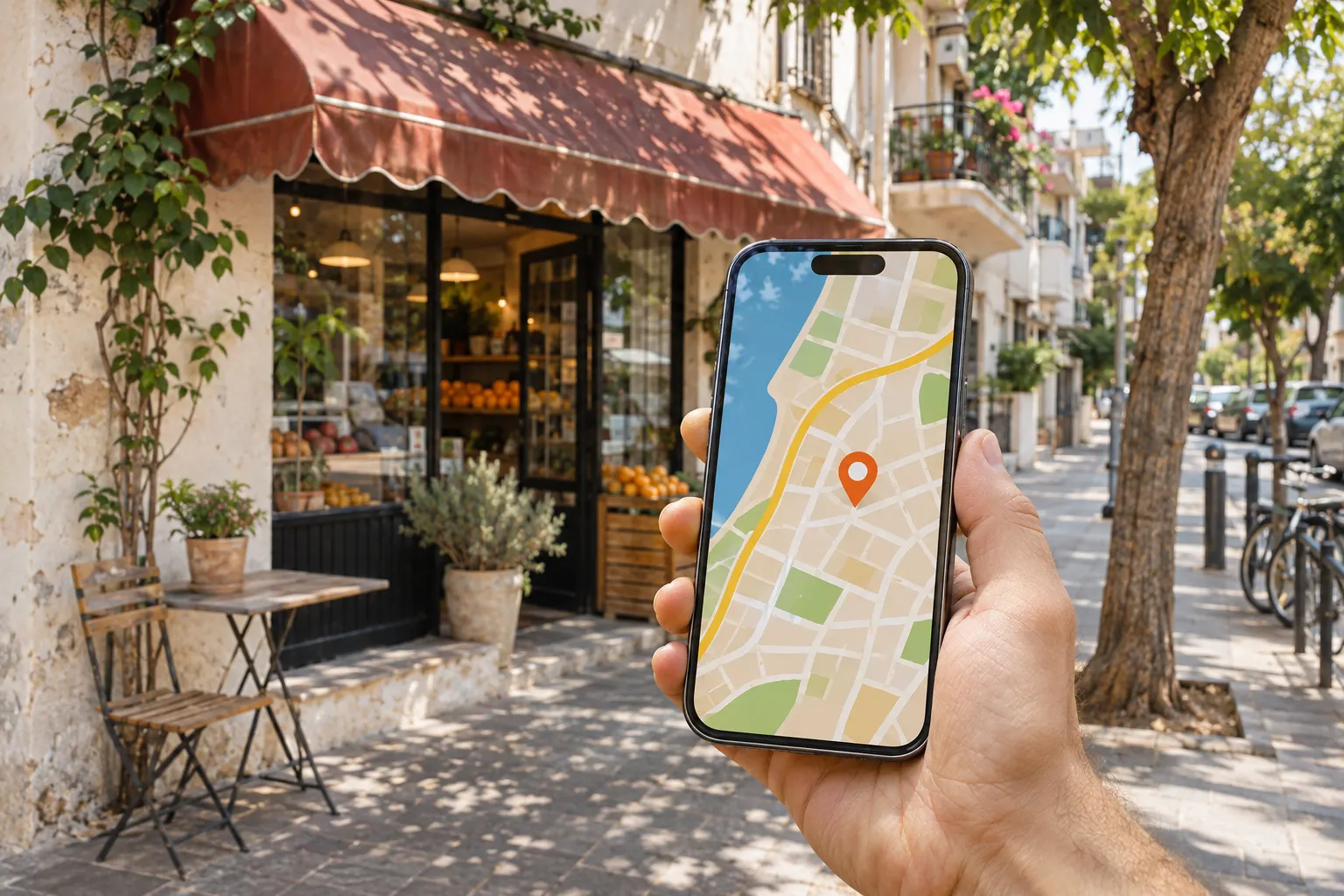
How to Get Your Business on Google Maps: A Complete Google Business Profile Guide
A complete guide to setting up a Google Business Profile for an Israeli business: creating it, verifying it, filling it in properly, reviews, and the mistakes that sink businesses on Maps.

What Is GEO? How to Get Your Business Into ChatGPT, Gemini and Perplexity Answers
More and more customers ask ChatGPT instead of Google. Here's how a small business can improve its chances of being named in the answer.